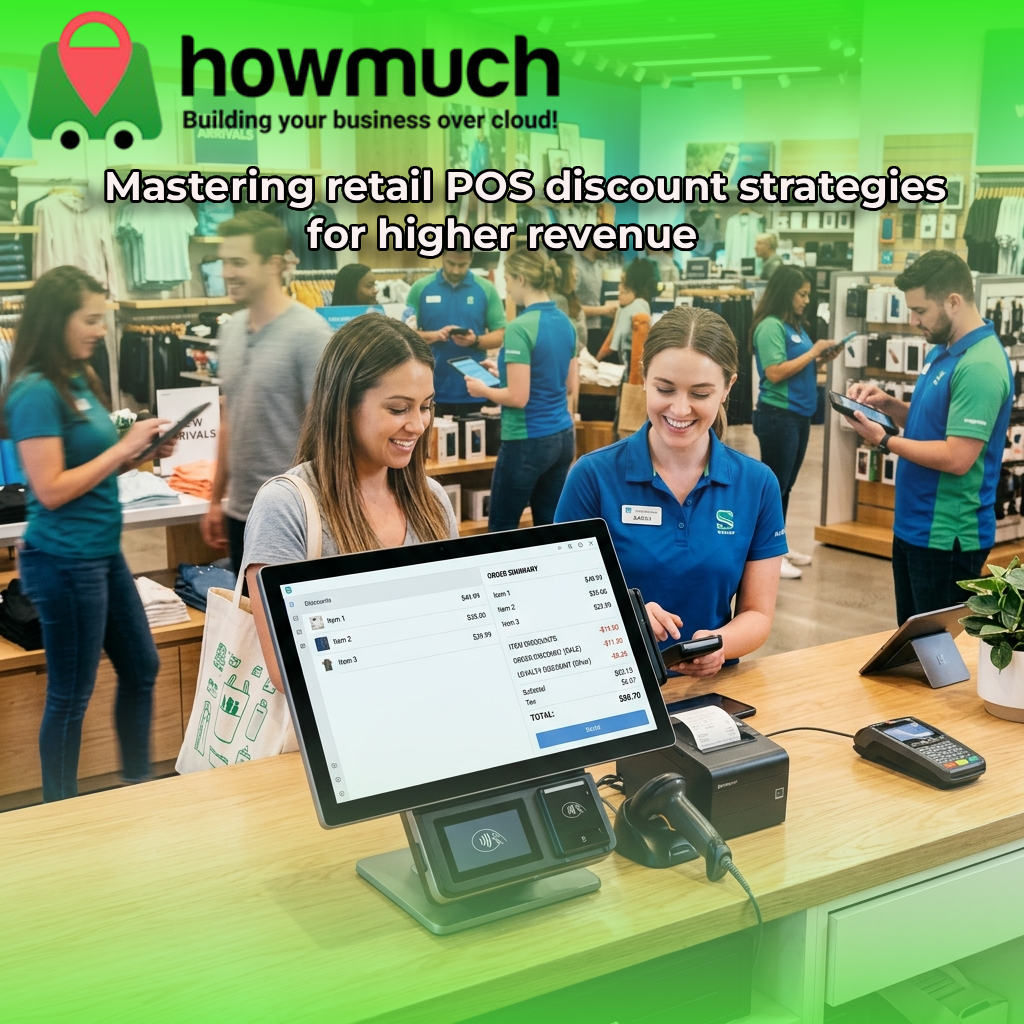

To effectively manage discounts in a retail environment, business owners must understand the difference between item-level and order-level discounts. Using a system like Howmuch POS ensures these discounts remain mutually exclusive, properly validated, and strictly controlled through user permissions to maximize profit margins and improve customer retention.
Understanding the precise mechanics behind retail discounts allows store owners to protect their profit margins while still offering compelling deals to consumers. By utilizing a robust cloud retail POS system, small to medium retailers can seamlessly integrate complex pricing strategies into their daily operations. This guide breaks down the core differences between various discount types, the validation rules required to prevent revenue leakage, and how to maintain total control over your pricing strategy.
How do item-level and order-level discounts differ in retail operations?
A fundamental rule of retail pricing architecture is separating discounts applied to individual products from those applied to the entire shopping cart.
The Howmuch POS system supports two distinct manual discount types: discount on the full order and discount on individual items. These two manual methods are intentionally kept separate to prevent stacking errors. If an order-level discount is already applied to a transaction, an item-level discount cannot be added. Conversely, if an item-level discount exists, the system blocks the addition of an order-level discount. Choose item-level discounts if targeting specific inventory shortages or clearance items matters more than incentivizing a high overall cart value.
What are the rules for item-level discounts?
When applying an item-level discount, cashiers can choose either a fixed currency amount or a percentage deduction. The system validates the discount before application to ensure profitability. The discount cannot be a negative value. A fixed discount cannot equal or exceed the item's baseline price, and a percentage reduction cannot reach 100 percent or more. After applying the approved discount, the system recalculates the item total based on the newly discounted unit price multiplied by the quantity. These item discounts immediately reflect in the item discount totals and the overall order totals.
What are the rules for order-level discounts?
For order-level discounts, the user can also select a fixed amount or a percentage. Percentage discounts are calculated directly from the order’s item total before taxes are applied. The Howmuch POS system validates that the order-level discount is not negative, the percentage does not exceed 100, and the final computed order discount does not exceed the allowed discountable order amount. Once validated, the order discount is applied, and the final total is recalculated.
How can retailers secure their discount strategies and prevent fraud?
Discount editing requires strict restrictions to prevent unauthorized price changes. Retailers must secure their point-of-sale systems to maintain accurate inventory costs and protect sales revenue.
Discounts cannot be changed when an order is already paid. This finality ensures accounting records match the exact funds collected. Furthermore, managers can disable manual discounts entirely at the store level through the Howmuch POS administrative settings. User permission is required to apply any manual discounts at the register. Cashiers and users without the required authorization simply cannot apply them, effectively eliminating unauthorized price overrides.
Why should you separate loyalty programs from manual POS discounts?
Modern retail requires a multi-channel marketing approach, which often includes automated promotions and customer loyalty programs.
The Howmuch POS system handles promotional discounts and loyalty program discounts entirely separately from manual checkout discounts. These automated reductions appear in transaction totals independently and are tracked as separate discount buckets alongside item discounts and order discounts. This separation provides business owners with clear, data-driven insights into exactly which marketing campaigns are driving sales.
All applied discounts are included in the final order calculations and are carried forward into the permanent order records. Printed and digital receipts can show detailed discount breakdowns, including the item discount, order discount, loyalty discount, promotion discount, and the total discount, depending on your specific receipt configuration.
Optimize your retail checkout experience today
Unlock unparalleled efficiency and control across your entire supply chain by standardizing your discount policies. Implementing strict validation rules, separating your loyalty rewards from manual markdowns, and enforcing user permissions will immediately protect your profit margins.
Take full control of your retail operations by auditing your current checkout procedures. Ensure your cashiers understand when to apply an item-level discount versus an order-level discount, and leverage your POS system's analytics to track which promotional strategies yield the highest customer retention.
Frequently Asked Questions
What is the primary risk of mixing item-level and order-level discounts?
Mixing these discount types often leads to "discount stacking," where a customer receives a larger price reduction than intended, resulting in lost profit margins. A properly configured system restricts users to applying only one manual discount type per transaction.
How much time does it take to set up discount permissions in a POS system?
Configuring user permissions in a cloud-based platform like Howmuch POS takes only a few minutes. Store administrators simply access the web portal, navigate to user settings, and toggle the discount authorization for specific employee profiles.
Are manual POS discounts the best option for long-term customer retention?
Manual discounts are effective for quick, in-store price adjustments, but automated loyalty programs are superior for long-term customer retention. Choose a loyalty program if sustained engagement and automated reward tracking matter more than immediate inventory clearance.
Who benefits most from detailed discount tracking on digital receipts?
Both the retailer and the consumer benefit from transparent receipts. Consumers appreciate seeing exactly how much money they saved through various promotions, while retailers benefit from the reduced likelihood of billing disputes and clearer accounting records.
What are the alternatives to fixed amount manual discounts?
The primary alternative to a fixed amount discount is a percentage-based discount. Percentage discounts are highly scalable across different product price points, whereas fixed amount discounts are best used for standardizing markdowns on specific, high-turnover inventory items.